

Quick answer
The bay's core snorkeling ground is the Hon Mun Marine Protected Area, open 07:00–17:00 daily, with a 22,000 VND conservation fee per adult. Arrive between 07:00 and 11:00: mornings bring the calmest water, the best underwater visibility and thinner crowds. Afternoon wind chop and boat traffic degrade clarity fast, especially on weekends.
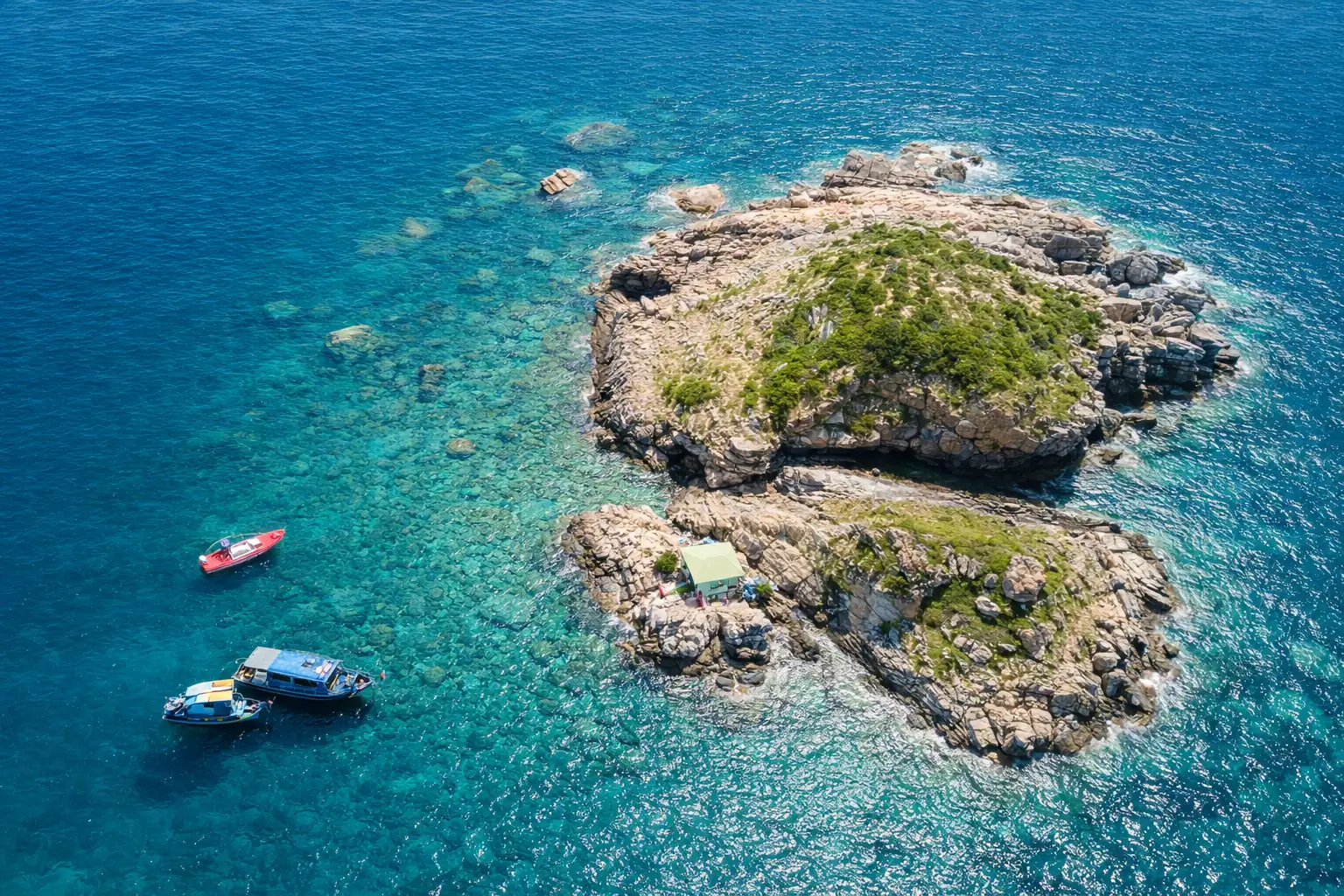
Hon Mun sits inside Vietnam's first marine protected area, declared in 2001, and its reef flats shelter well over 300 recorded hard coral species — roughly two-thirds of everything catalogued worldwide in that group. That density is why the nha trang snorkeling spots most travellers eventually visit cluster around a single volcanic island rather than spreading across the bay. The basalt columns that give Hon Mun its name — mun means ebony — drop into water that stays clear when the wind behaves. What a first-time visitor actually deals with is a choice between geography and effort. The bay's inner islands, Hon Tam and Hon Mieu among them, are close, cheap to reach and heavily used; their coral has thinned under decades of anchor damage and storm scour. Hon Mun and the outer waters near Hon Tre's southern shoulder hold better structure: parrotfish grazing on plate coral, clownfish in anemone patches, the occasional cuttlefish over sand channels. The trade-off is distance. Reaching the protected zone means a boat from Cau Da or Vinh Nguyen, and it means committing the earlier part of the day. Local operators sell this as a lặn ống thở trip — the Vietnamese term for snorkelling — and most Nha Trang island tour itineraries string two or three stops together for that reason. Season shapes the picture as firmly as location does. From roughly February to September the bay is settled and visibility can run past fifteen metres on a good morning. The northeast monsoon, arriving around October, pushes swell and river runoff into the same water and can flatten visibility to a few metres for weeks. August sits comfortably inside the reliable stretch. Coral bleaching events in recent years have also closed sections of reef temporarily while regeneration work proceeds, so conditions at any single site are not fixed. The practical takeaway is to treat the reef as the fixed point and build the day around it. Choose an operator whose route reaches the protected area rather than the nearer shallows, confirm the stop by name before boarding, and plan to be in the water early. Read the dedicated sections below for the full timing, fee and access detail; used together, they turn a vague shortlist of nha trang snorkeling spots into a workable morning.
“Treat the reef as the fixed point and build the day around it, not the other way round.”
The Best Time for Nha Trang Snorkeling Spots
The prime window for snorkeling in Nha Trang is from January to August, when calm seas provide the highest underwater visibility. Prioritizing the best arrival window of 07:00–11:00 ensures access to the clearest water conditions before the midday winds arrive.
January to August
Low to ModerateDry season, 25°C to 32°C
This period offers the most stable sea conditions and consistent visibility for reef exploration.
September to December
LowMonsoon season, 23°C to 28°C
Frequent rainfall and increased wave activity often lead to reduced visibility and occasional boat cancellations.
Weekday mornings
Minimal—
Visiting between 07:00 and 11:00 provides the calmest water surface and avoids the high volume of tour groups arriving later in the day.
Verdict: For optimal snorkeling conditions, plan your visit during a weekday morning between January and August.
Opening Hours for Nha Trang Snorkeling Spots
Marine protection zones in Nha Trang are open daily to visitors for snorkeling activities. These hours apply to access within the protected areas of Hon Mun Island.
| Monday | 07:00–17:00 | |
|---|---|---|
| Tuesday | 07:00–17:00 | |
| Wednesday | 07:00–17:00 | |
| Thursday | 07:00–17:00 | |
| Friday | 07:00–17:00 | |
| Saturday | 07:00–17:00 | |
| Sunday | 07:00–17:00 |
Top-Rated Nha Trang Snorkeling Spots to Explore
Nha Trang Bay offers a variety of marine environments, ranging from shallow coral gardens to protected conservation zones. These locations provide diverse opportunities for observing reef fish and hard coral formations.
Hon Mun Marine Protected Area
This core conservation zone features extensive hard coral cover and a high density of reef fish species.
Focus on the outer reef slope for clearer water and diversity.
Hon Mun Marine Protected Area coral reef
Mini Beach
A smaller, sheltered bay known for its calm, shallow waters and sandy entry points suitable for novice snorkelers.
Stay near the rock formations on the edges to find marine life.
Mini Beach Nha Trang snorkel area
Mot Island
Located close to the mainland, this site features shallow fringing reefs that are accessible during calm sea conditions.
Visit during low tide to observe shallow-water coral colonies closely.
Mot Island coastal reef zone
Tam Island
This location offers managed snorkeling areas with distinct zones designated for observing varied marine topography.
Swim away from the pier to find less disturbed coral patches.
Tam Island snorkel site
How to Reach Nha Trang Snorkeling Spots
Nha Trang snorkeling spots are situated primarily around the offshore islands within Nha Trang Bay, including Hon Mun Island, Khanh Hoa Province. Access to these protected reefs is exclusively available via registered boat transport.
Public ferry from Cau Da Port
Guided group speedboat tour from private piers
Private vessel charter from Cau Da Port
Rules for Visiting Nha Trang Snorkeling Spots
Hon Mun sits inside a Marine Protected Area, where a single kick or grab can break coral that took decades to grow. Conservation etiquette here is less about politeness than about whether the reef survives the season.
Do
- Float horizontally above coral and keep fins clear of the reef
- Wear reef-safe mineral sunscreen or a long-sleeved rash guard instead
- Use a life vest or noodle if your buoyancy is uncertain
- Follow guide briefings on marked snorkeling zones and boundary buoys
- Carry your rubbish back to the boat, including bottle caps
- Observe fish and turtles from a distance of two metres
Don't
- Do not touch, stand on, or hold onto any coral
- Do not collect shells, coral fragments, starfish, or sand as souvenirs
- Do not feed fish bread, rice, or leftovers from the boat
- Do not chase, corner, or grab marine life for photographs
- Do not drop anchor, gear, or weights onto reef surfaces
- Do not spit sunscreen residue or rinse chemicals into the water
Check availability
Frequently asked questions about nha trang snorkeling spots
Everything you need to know about nha trang snorkeling spots